https://www.flipsnack.com/Syahrizresources/unlimited-income.html
Sunday, March 4, 2018


Friday, September 20, 2013

Friday, August 16, 2013

Monday, August 5, 2013
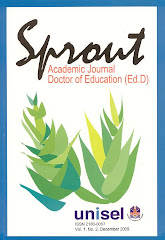
Journal SPROUT 2013
Editor’s Comment
This is the third issue of “Sprout”. The first issue of 1000 copies was published in December 2009, the second issue of 2000 copies was published in July 2009 and the third issue is expected to be published in June 2013 with 3000 copies. The increase in the number of copies is to meet the increasing demand from students, well-wishers and friends. The positive response from members of the public had given encouragement to the committee to continue publishing the Journal to meet the demands of our readers. The editorial committee wishes to thank their supporters since their comments, appreciation and even criticism have become the source of inspiration to them to improve the Journal from time to time.
The first and the second issue of “Sprout” have actually prompted our students to compete with each other in producing academic articles to be published in “Sprout”. Students are well-aware that “Sprout” is no ordinary publication. To sustain the quality and the good standard of the publication, all titles in the Journal are research-based, complete with complete with correct referencing and the bibliography compilation based on the Harvard System of Writing Convention. It appears that more students are now working hard to write articles for “Sprout”. Every student wants to see his or her article published at least once in the three-year period he or she stays in the programme in UNISEL. In this sense, it is perceived that “Sprout” has indirectly becomes the driving force for our students to produce respected research-based articles.
As has been mentioned in this column in the previous issues of “Sprout” the Journal committee invites members of the academic community in other faculties of UNISEL to send their articles for publication in “Sprout”. To date this invitation has not yet been taken up very seriously. The invitation to write articles is still opened to them especially students from other programmes in UNISEL. As members of academic they should write academic articles for journals or any respected publication locally or abroad. Such writings can become the testimony of the quality of an academician.
Sometimes it is sad to note that academicians in our society are not too bothered to think about writing quality academic articles. They may be good in teaching and research but they are certainly not so good at writing. People with doctorate qualification and the only writing these people produce have been their thesis. A thesis is perhaps compulsory to complete a doctorate degree. Doctoral students are forced to write thesis which is compulsory to complete their degrees. They have to write but after that these researchers tend to forget about writing. This attitude is certainly bad for the society. People who have complete doctoral qualification or even a masters degree qualifications must disseminate the vast knowledge that they have acquired throughout their study to members of the society who have had no opportunity whatsoever to study beyond the tertiary levels.
A respected academician must be effective in teaching, be productive in research and be excellent in writing for publication plus should render some form of community services. Then society can be proud of the type of academicians that we have in Malaysia. Academicians without publications are analogous to trees without leaves and fruits. This is the type of rewards that academicians should not tolerate at all and at any time. It is therefore imperative that academicians produce books and learned articles to be published in journals, magazines, gazettes and in any respected publications throughout their lives.
Academicians in the West often take research and writing of academic papers as their forte. They follow the axiom “Publish or Perish”. Academicians especially those conferred with the title of professors write books and publish them at least once in two years. Besides, these overseas professors who produce high quality articles for publication in journals, gazettes, magazines, tabloids and newspapers. Seldom do they hear professors who do not write books or at least academic papers for publication. But sadly in Malaysia this is common where professors have nothing to show as testimony to their scholarly achievement and experience.
Therefore, it is high time that our professors emulate the attitude of academicians in western societies by conducting extensive and scientific research should followed by publishing the findings in the form of books, monographs or articles for journals, magazines or for presentation in seminars and conferences. We in UNISEL , wishes to see such changes in the attitude of our academicians soon. But when, this is the question that we all are waiting for.
The Editor
Sprout
Monday, September 26, 2011
CALENDER FOR THE YEAR 2010
DOCTOR OF EDUCATION DEGREE (Ed.D)
CALENDER FOR THE YEAR 2010
JANUARY 2010 – APRIL 2010
This is a complete Time table for the semester beginning January 2010 to April 2010. The schedule states the Dates, Times and the Instructor teaching the module. Unless otherwise stated all lectures are at the Faculty of Education, Bestari Jaya.
Students are advised to study the schedule thoroughly before deciding what modules to offer this semester. This is to avoid confusions and problems due to wrong choice of modules, timings and instructors. Once decision is made no changes is allowed.
Please study the schedule thoroughly and then register the modules that they plan to offer for the semester. Fill in the form together with this notice and return to me as quickly as possible but no later than December 15, 2009. This is important to enable the programme head to plan the classes and prepare for the classrooms. Return the answer slips by post or e-mail to sulaimanshamsuri@yahoo.com.my.
Thank you.
DR SULAIMAN SHAMSURI
HEAD OF PROGRAMME Ed.D.
1/12/2009
CALENDER FOR THE YEAR 2010
JANUARY 2010 – APRIL 2010
This is a complete Time table for the semester beginning January 2010 to April 2010. The schedule states the Dates, Times and the Instructor teaching the module. Unless otherwise stated all lectures are at the Faculty of Education, Bestari Jaya.
Students are advised to study the schedule thoroughly before deciding what modules to offer this semester. This is to avoid confusions and problems due to wrong choice of modules, timings and instructors. Once decision is made no changes is allowed.
Please study the schedule thoroughly and then register the modules that they plan to offer for the semester. Fill in the form together with this notice and return to me as quickly as possible but no later than December 15, 2009. This is important to enable the programme head to plan the classes and prepare for the classrooms. Return the answer slips by post or e-mail to sulaimanshamsuri@yahoo.com.my.
Thank you.
DR SULAIMAN SHAMSURI
HEAD OF PROGRAMME Ed.D.
1/12/2009
Tuesday, December 29, 2009

Monday, December 28, 2009
SEMUA PELAJAR DOCTOR OF EDUCATION (Ed.D.)
Pelajar-pelajar hendaklah selalu melayari Web Ed.D. alamat eddunisel.blogspot.com untuk mendapatkan maklumat terkini. Semua maklumat disalurkan melalui Web ini. Kita tidak lagi menghantar maklumat secara individu. Pelajar-pelajar yang tidak tahu melayari Web hendaklah belajar dengan kawan-kawan atau hubungi Encik Mohamad Hashim (019-2887273 (muhd@unisel.edu.my).
Tarikh pendaftaran pada semester hadapan ialah 2hb. Januari 2010. Pelajar-pelajar yang tidak mendaftar dianggap berhenti mengikuti program Ed.D.
Sila anggap maklumat ini sebagai penting.
The Journal (SPROUT) is ready for distribution. Every student is requested to contribute RM100.00 to meet the cost of publication. In return I give you 10 copies. You sell to friends at RM10.00 each. You take one for your personal copy and sell the remaining nine. That will return your RM100.00. Do not forget to bring RM100.00 when you com on 2/1/2010.
Tarikh pendaftaran pada semester hadapan ialah 2hb. Januari 2010. Pelajar-pelajar yang tidak mendaftar dianggap berhenti mengikuti program Ed.D.
Sila anggap maklumat ini sebagai penting.
The Journal (SPROUT) is ready for distribution. Every student is requested to contribute RM100.00 to meet the cost of publication. In return I give you 10 copies. You sell to friends at RM10.00 each. You take one for your personal copy and sell the remaining nine. That will return your RM100.00. Do not forget to bring RM100.00 when you com on 2/1/2010.
Friday, November 27, 2009
DOCTOR OF EDUCATION
CALENDER FOR THE YEAR 2010
JANUARY – APRIL 2010
This is the calendar for the first four months of the year 2010. The programme designed a complete Time Table stating the dates and the modules offered through the semester. Except for the newly registered students all other students would have to design their own schedule. In doing so, students would need to determine the modules that they have not taken and the dates reserved for that particular module.
Register the modules of your choice using the form together with this notice and return to me immediately. This is necessary to enable me to confirm the time table. Please take note that the programme is not going to choose the modules for the students. Instead, the students will choose the subjects that they want to offer this semester. This is because at this stage most existing students have very few modules left and therefore they decide for themselves. The head of the programme is not in position to decide the modules for the students.
No.
MODULES
DATES
TIME
INSTRUCTOR
1.
EPE 6183 Evaluation:
Models and Techniques (3cr)
02.1.2010
03.1.2010
30.1.2010
31.1.2010
06.3.2010
07.3.2010
0900 – 1700
(hours)
DR. SULAIMAN SHAMSURI
(42 hours)
2.
EDE 6463 Sociology of Education (3cr)
16.1.2010
17.1.2010
13.2.2010
14.2.2010
13.3.2010
14.3.2010
0900 – 1700
(hours)
DR. SULAIMAN SHAMSURI
(42 hours)
3.
EPE 6143 Research Methodology (3cr)
(New Students Intake January 2010)
09.1.2010
10.1.2010
20.2.2010
20.3.2010
27.3.2010
10.4.2010
0900 – 1700
(hours)
DR. SULAIMAN SHAMSURI
(42 hours)
4.
EPE 6203 Theory and Practise of Academic Writings (3cr)
(New Students Intake January 2010)
21.2.2010
21.3.2010
28.3.2010
11.4.2010
17.4.2010
18.4.2010
0900 – 1700
(hours)
DR. SULAIMAN SHAMSURI
(42 hours)
5.
EPE 6213 Organizational Behaviour in Education (3cr)
02.1.2010
03.1.2010
06.2.2010
07.2.2010
20.3.2010
21.3.2010
0900 – 1700
(hours)
DR. K. RAJALINGAM
(42 hours)
6.
EPE 6153 Management in Higher Education (3cr)
02.1.2010
23.1.2010
06.2.2010
27.2.2010
13.3.2010
03.4.2010
0900 – 1700
(hours)
PROF. DR. AB. RAHIM SELAMAT
(42 hours)
7.
EPE 6123 Leadership in Higher Education (3cr)
3.1.2010
24.1.2010
07.2.2010
28.2.2010
14.3.2010
4.4.2010
0900 – 1700
(hours)
PROF. DR. AB. RAHIM SELAMAT
(42 hours)
8.
EPE 6173 Statistical Methods Applied to Education (3cr)
16.1.2010
17.1.2010
06.2.2010
07.2.2010
21.3.2010
22.3.2010
0900 – 1700
(hours)
DR. AB. HALIM AHMAD
(42 hours)
9.
EDE 6433 Individual and Group Counselling (3cr)
16.1.2010
17.1.2010
06.2.2010
07.2.2010
21.3.2010
22.3.2010
0900 – 1700
(hours)
PROF. DATO DR. MOHAMAD MANSOR ABDULLAH
(42 hours)
10.
EDE 6413 Staff Development Programmes (3cr)
16.1.2010
17.1.2010
13.2.2010
14.2.2010
20.3.2010
21.3.2010
0900 – 1700
(hours)
PROF. DR. AB. RAHIM SELAMAT
(42 hours)
Only ten (10) modules are offered this coming semester. The other modules are offered in May 2010. Every student is allowed to offer two modules on part time basis. Any student who has nothing to offer may concentrate on doing the practicum or to write their project paper. But they must register in order to maintain their studentship status. Failure to register will result in their names dropped from the list of students. Students who do not register are considered as terminating their study from the Ed.D. programme.
Please study the schedule thoroughly and then register the modules that they plan to offer for the semester. Fill in the form together with this notes and return to me as quickly as possible but not later than December 16, 2010. This is imported to enable the programme head to plan the classes and prepare the classrooms. Return the answer slip by post or e-mail to sulaimanshamsuri@yahoo.com.
Thank you
DR. SULAIMAN SHAMSURI
HEAD OF PROGRAMME Ed. D.
27/11/2009
CALENDER FOR THE YEAR 2010
JANUARY – APRIL 2010
This is the calendar for the first four months of the year 2010. The programme designed a complete Time Table stating the dates and the modules offered through the semester. Except for the newly registered students all other students would have to design their own schedule. In doing so, students would need to determine the modules that they have not taken and the dates reserved for that particular module.
Register the modules of your choice using the form together with this notice and return to me immediately. This is necessary to enable me to confirm the time table. Please take note that the programme is not going to choose the modules for the students. Instead, the students will choose the subjects that they want to offer this semester. This is because at this stage most existing students have very few modules left and therefore they decide for themselves. The head of the programme is not in position to decide the modules for the students.
No.
MODULES
DATES
TIME
INSTRUCTOR
1.
EPE 6183 Evaluation:
Models and Techniques (3cr)
02.1.2010
03.1.2010
30.1.2010
31.1.2010
06.3.2010
07.3.2010
0900 – 1700
(hours)
DR. SULAIMAN SHAMSURI
(42 hours)
2.
EDE 6463 Sociology of Education (3cr)
16.1.2010
17.1.2010
13.2.2010
14.2.2010
13.3.2010
14.3.2010
0900 – 1700
(hours)
DR. SULAIMAN SHAMSURI
(42 hours)
3.
EPE 6143 Research Methodology (3cr)
(New Students Intake January 2010)
09.1.2010
10.1.2010
20.2.2010
20.3.2010
27.3.2010
10.4.2010
0900 – 1700
(hours)
DR. SULAIMAN SHAMSURI
(42 hours)
4.
EPE 6203 Theory and Practise of Academic Writings (3cr)
(New Students Intake January 2010)
21.2.2010
21.3.2010
28.3.2010
11.4.2010
17.4.2010
18.4.2010
0900 – 1700
(hours)
DR. SULAIMAN SHAMSURI
(42 hours)
5.
EPE 6213 Organizational Behaviour in Education (3cr)
02.1.2010
03.1.2010
06.2.2010
07.2.2010
20.3.2010
21.3.2010
0900 – 1700
(hours)
DR. K. RAJALINGAM
(42 hours)
6.
EPE 6153 Management in Higher Education (3cr)
02.1.2010
23.1.2010
06.2.2010
27.2.2010
13.3.2010
03.4.2010
0900 – 1700
(hours)
PROF. DR. AB. RAHIM SELAMAT
(42 hours)
7.
EPE 6123 Leadership in Higher Education (3cr)
3.1.2010
24.1.2010
07.2.2010
28.2.2010
14.3.2010
4.4.2010
0900 – 1700
(hours)
PROF. DR. AB. RAHIM SELAMAT
(42 hours)
8.
EPE 6173 Statistical Methods Applied to Education (3cr)
16.1.2010
17.1.2010
06.2.2010
07.2.2010
21.3.2010
22.3.2010
0900 – 1700
(hours)
DR. AB. HALIM AHMAD
(42 hours)
9.
EDE 6433 Individual and Group Counselling (3cr)
16.1.2010
17.1.2010
06.2.2010
07.2.2010
21.3.2010
22.3.2010
0900 – 1700
(hours)
PROF. DATO DR. MOHAMAD MANSOR ABDULLAH
(42 hours)
10.
EDE 6413 Staff Development Programmes (3cr)
16.1.2010
17.1.2010
13.2.2010
14.2.2010
20.3.2010
21.3.2010
0900 – 1700
(hours)
PROF. DR. AB. RAHIM SELAMAT
(42 hours)
Only ten (10) modules are offered this coming semester. The other modules are offered in May 2010. Every student is allowed to offer two modules on part time basis. Any student who has nothing to offer may concentrate on doing the practicum or to write their project paper. But they must register in order to maintain their studentship status. Failure to register will result in their names dropped from the list of students. Students who do not register are considered as terminating their study from the Ed.D. programme.
Please study the schedule thoroughly and then register the modules that they plan to offer for the semester. Fill in the form together with this notes and return to me as quickly as possible but not later than December 16, 2010. This is imported to enable the programme head to plan the classes and prepare the classrooms. Return the answer slip by post or e-mail to sulaimanshamsuri@yahoo.com.
Thank you
DR. SULAIMAN SHAMSURI
HEAD OF PROGRAMME Ed. D.
27/11/2009
Saturday, May 23, 2009
BENGKEL PENYEDIAAN MODUL LATIHAN PENYELIDIKAN
SELAMAT DATANG KE BENGKEL
PENYEDIAAN MODULE LATIHAN PENYELIDIKAN
INSTITUT PENYELIDIKAN SISTEM KESIHATAN KEMENTERIAN KESIHATAN MALAYSIA
HOTEL BAYVIEW MELAKA
25-27 MEI 2009
Penceramah : Prof. Madya Dr. Sulaiman Shamsuri
http://sulaimanshamsuri.blogspot.com
THE WHOLE SESSION OVER THREE DAYS WILL COVER SEVEN SEGMENTS
SEGMENT 1:
General overview on research methods
The research process
Research proposal
Data and different ways of collecting data
Instrument and instrumentation
Questionnaire and interviews
Related research and literature
Population
Analysis of research data
The end-product research
SEGMENT 2:
Formation of teaching and learning objects on research methodology
1.0 Objectives of the session
– Orientation of trainers about research methods on social science.
– To enable trainers to teach research methods effectively.
– Facilitating trainers to develop a standard lesson plan used in teaching research
methodology to their students.
– To enable student trainees to understand research and to conduct research work
successfully.
2.0 To develop a standard and uniform training module for the IPSK.
SEPARATION OF HEADINGS
1.0 INTRODUCTION
– General overview
2.0 RESEARCH DESIGNS
RESEARCH PROCESS
3.0 RESEARCH PROPOSAL
DEVELOPING A RESEARCH QUESTIONNAIRE
4.0 LITERATURE REVIEW
5.0 RESEARCH POPULATION
(General / target / accessible)
SAMPLING METHODS
6.0 ANALYSIS OF RESEARCH DATA
(Manual / SPSS approach)
7.0 THE END-PRODUCT OF RESEARCH
(The summary / findings / conclusions and recommendation)
SEGMENT 3
WORKSHOP
PENYEDIAAN MODULE LATIHAN PENYELIDIKAN
INSTITUT PENYELIDIKAN SISTEM KESIHATAN KEMENTERIAN KESIHATAN MALAYSIA
HOTEL BAYVIEW MELAKA
25-27 MEI 2009
Penceramah : Prof. Madya Dr. Sulaiman Shamsuri
http://sulaimanshamsuri.blogspot.com
THE WHOLE SESSION OVER THREE DAYS WILL COVER SEVEN SEGMENTS
SEGMENT 1:
General overview on research methods
The research process
Research proposal
Data and different ways of collecting data
Instrument and instrumentation
Questionnaire and interviews
Related research and literature
Population
Analysis of research data
The end-product research
SEGMENT 2:
Formation of teaching and learning objects on research methodology
1.0 Objectives of the session
– Orientation of trainers about research methods on social science.
– To enable trainers to teach research methods effectively.
– Facilitating trainers to develop a standard lesson plan used in teaching research
methodology to their students.
– To enable student trainees to understand research and to conduct research work
successfully.
2.0 To develop a standard and uniform training module for the IPSK.
SEPARATION OF HEADINGS
1.0 INTRODUCTION
– General overview
2.0 RESEARCH DESIGNS
RESEARCH PROCESS
3.0 RESEARCH PROPOSAL
DEVELOPING A RESEARCH QUESTIONNAIRE
4.0 LITERATURE REVIEW
5.0 RESEARCH POPULATION
(General / target / accessible)
SAMPLING METHODS
6.0 ANALYSIS OF RESEARCH DATA
(Manual / SPSS approach)
7.0 THE END-PRODUCT OF RESEARCH
(The summary / findings / conclusions and recommendation)
SEGMENT 3
WORKSHOP
Friday, May 15, 2009
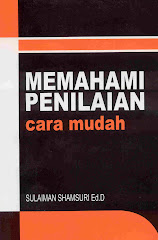
Memahami Penilaian Cara Mudah
Negara kini berada dalam era perindustrian. Malah beberapa buah kota besar sudah menuju ke arah pasca perindustrian. Ahli-ahli sosiologi mengandaikan masyarakat perindustrian sebagai rumit dengan ahli-ahlinya yang ramai tetapi rata-rata bersifat individualistik dan materialistik. Hubungan kekeluargaan mula renggang dan persaingan menebal dalam banyak perkara. Nilai-nilai masyarakat pertanian seperti yang kita sama-sama kecapi sebelum era 70’an dahulu sudah lama pupus ditelan zaman. Jika kehidupan dalam era masyarakat pertanian dahulu penuh dengan suasana harmonis, damai dan dengan semangat kekitaan yang unggul kini berganti dengan suasana curiga-mencurigai antara satu sama lain. Dalam masyarakat perindustrian persaingan hidup amat sengit tanpa semangat kerjasama di kalangan ahli-ahlinya.
Suasana tidak menentu ini berpunca dari beberapa faktor yang tersurat dan yang tersirat. Di antara contoh-contoh faktor yang tersurat ialah wang, kos hidup yang mahal, cara hidup yang tinggi, pengaruh media cetak dan media elektronik, migrasi dalam negara dan migrasi antara-bangsa. Manakala faktor-faktor yang tersirat pula di antaranya ialah perubahan cara berfikir, persepsi orang ramai terhadap sesuatu keadaan dan tafsiran globalisasi atau dunia tanpa sempadan. Kedua-dua faktor yang tersurat dan yang tersirat ini bukan sahaja mempengaruhi kehidupan dan cara hidup orang ramai tetapi juga aspek-aspek lain dalam kebudayaan Malaysia.
Turut merasai akibat dari faktor-faktor ini ialah organisasi-organisasi formal termasuk produknya, objektifnya, prosedurnya dan programnya. Faktor-faktor yang mempengaruhi keseluruhan organisasi ini meresap, tanpa disedari hingga akhirnya memperlihatkan kesan dan akibat yang boleh membawa pada kerosakan dan kerugian kepada organisasi-organisasi. Untuk mengelakkan dari mengalami kerosakan dan kerugian ini organisasi-organisasi hendaklah sentiasa menilai prestasi mereka dari semasa ke semasa.
Aktiviti menilai sering dikaitkan dengan pengurusan dalam organisasi. Setengah pakar penilaian mendakwa bahawa penilaian adalah berhubungan rapat dengan pengurusan. Pengurus-pengurus yang berwibawa, peka dan perihatian sentiasa mengamalkan aktiviti menilai untuk menjamin bahawa organisasi mereka berjalan pada landasan yang betul, programnya terkawal, produknya mampu menarik minat pengguna manakala objektifnya tidak terpesong dan prosedurnya menepati rancangan asal. Sebaliknya, para pengurus yang mengabaikan aktiviti menilai sering mendapati organisasi mereka kurang maju, prestasi perniagaan merosot dan mudah tewas dalam persaingan. Lihatlah betapa pentingnya penilaian dalam kehidupan sehariaan.
Tetapi aktiviti menilai bukanlah sesuatu yang mudah dilakukan. Aktiviti menilai ini tidak boleh dilakukan sewenang-wenangnya melainkan mesti melalui perancangan yang sempurna, dilaksanakan mengikut prosedur yang betul dan dengan menggunakan instrumen yang bersesuaian. Oleh itu cara melakukan aktiviti menilai ini mesti dipelajari dengan rapi dan teliti. Hanya dengan cara demikian seseorang itu berkebolehan melakukan penilaian sama ada ke atas program, produk, prosedur atau objektif. Atas kesedaran ini di samping permintaan dari pelajar-pelajar dan galakkan dari kawan-kawan pengarang terpanggil untuk mengarang buku ini yang diberi judul “MEMAHAMI PENILAIAN CARA MUDAH”.
Tujuan utama pengarang menulis buku ini adalah untuk mengorientasikan para pembaca dengan erti penilaian, tujuan penilaian dan matlamat penilaian. Seterusnya pembaca diperkenalkan dengan beberapa kaedah menilai dan pendekatan-pendekatan mengutip maklumat penilaian. Akhir sekali pembaca didedahkan dengan matlamat penilain ia itu laporan akhir dan cara-cara menulis atau menyediakan laporan akhir penilaian. Adalah menjadi harapan pengarang supaya para pembaca membaca buku ini dengan penuh tumpuan dan pemahaman supaya di akhir nanti para pembaca mampu melakukan penilaian dengan betul, sempurna dan berkesan supaya dapat mencapai hasil yang maksima.
Pada bahagian tengah buku ini pembaca dibawa meneliti kaedah-kaedah yang dipakai oleh beberapa buah Universiti di Canada menilai program pembelajaran mereka. Tetapi para pembaca harus diingatkan bahawa penilaian tidak hanya dikaitkan dengan pendidikan sahaja. Penilaian mustahak juga dianjurkan ke atas organisasi formal dalam sektor awam atau sektor swasta, badan-badan berkanun dan persatuan-persatuan sukarela. Tegasnya, pengetahuan dalam ilmu penilaian ini boleh diaplikasikan pada banyak perkara termasuk menilai manusia sebagai seorang individu dengan menggunakan beberapa pertunjuk tertentu. Buku ini sangat berguna kepada pengurus-pengurus organisasi pada semua peringkat, eksekutif-eksekutif, pentadbir-pentadbir, pendidik-pendidik dan pelajar-pelajar di pusat-pusat pengajian tinggi.
Buku “Memahami Penilaian Cara Mudah” ini disempurnakan dengan bantuan beberapa orang. Mereka terdiri dari anak-anak pengarang Hadzli Sulaiman yang menyediakan teks asal dan Ir. Dr. Riza Sulaiman yang menyusun menjadi bentuk buku. Dua orang bekas pelajar kepada pengarang iaitu Ibrahim Bujal (M.A) menguruskan penerbitan dan Jumaddi Shafiai (M.A) melukis grafik pada kulit buku. Mereka ini berperanan penting dalam menyiapkan buku ini di samping ramai lagi pelajar-pelajar yang memberikan galakan dan sokongan kepada pengarang menyiapakan buku ini. Tanpa mereka ini mungkin sukar bagi pengarang mencapai cita-cita ini.
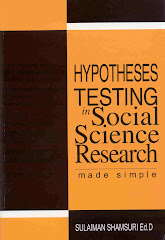
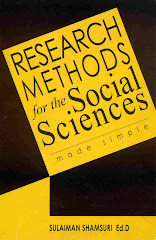
Ini adalah buku pertama ditulis oleh pengarang dalam Bahasa Melayu. Sebelum ini pengarang telah menghasilkan dua buah buku akademik dalam Bahasa Inggeris masing-masing berjudul “Research Methods for the Social Scienes, made simple” dan “ Hypotheses Testing in Social Sciene Research, made simple”. Buku ini adalah yang ketiga dalam siri penerbitan pengarang. Buku yang ke empat dalam Bahasa Inggeris berjudul “From the In-loco-Parentis Doctrine to Education as two-sides of a coin” akan terbit dalam sedikit masa lagi.
Suasana tidak menentu ini berpunca dari beberapa faktor yang tersurat dan yang tersirat. Di antara contoh-contoh faktor yang tersurat ialah wang, kos hidup yang mahal, cara hidup yang tinggi, pengaruh media cetak dan media elektronik, migrasi dalam negara dan migrasi antara-bangsa. Manakala faktor-faktor yang tersirat pula di antaranya ialah perubahan cara berfikir, persepsi orang ramai terhadap sesuatu keadaan dan tafsiran globalisasi atau dunia tanpa sempadan. Kedua-dua faktor yang tersurat dan yang tersirat ini bukan sahaja mempengaruhi kehidupan dan cara hidup orang ramai tetapi juga aspek-aspek lain dalam kebudayaan Malaysia.
Turut merasai akibat dari faktor-faktor ini ialah organisasi-organisasi formal termasuk produknya, objektifnya, prosedurnya dan programnya. Faktor-faktor yang mempengaruhi keseluruhan organisasi ini meresap, tanpa disedari hingga akhirnya memperlihatkan kesan dan akibat yang boleh membawa pada kerosakan dan kerugian kepada organisasi-organisasi. Untuk mengelakkan dari mengalami kerosakan dan kerugian ini organisasi-organisasi hendaklah sentiasa menilai prestasi mereka dari semasa ke semasa.
Aktiviti menilai sering dikaitkan dengan pengurusan dalam organisasi. Setengah pakar penilaian mendakwa bahawa penilaian adalah berhubungan rapat dengan pengurusan. Pengurus-pengurus yang berwibawa, peka dan perihatian sentiasa mengamalkan aktiviti menilai untuk menjamin bahawa organisasi mereka berjalan pada landasan yang betul, programnya terkawal, produknya mampu menarik minat pengguna manakala objektifnya tidak terpesong dan prosedurnya menepati rancangan asal. Sebaliknya, para pengurus yang mengabaikan aktiviti menilai sering mendapati organisasi mereka kurang maju, prestasi perniagaan merosot dan mudah tewas dalam persaingan. Lihatlah betapa pentingnya penilaian dalam kehidupan sehariaan.
Tetapi aktiviti menilai bukanlah sesuatu yang mudah dilakukan. Aktiviti menilai ini tidak boleh dilakukan sewenang-wenangnya melainkan mesti melalui perancangan yang sempurna, dilaksanakan mengikut prosedur yang betul dan dengan menggunakan instrumen yang bersesuaian. Oleh itu cara melakukan aktiviti menilai ini mesti dipelajari dengan rapi dan teliti. Hanya dengan cara demikian seseorang itu berkebolehan melakukan penilaian sama ada ke atas program, produk, prosedur atau objektif. Atas kesedaran ini di samping permintaan dari pelajar-pelajar dan galakkan dari kawan-kawan pengarang terpanggil untuk mengarang buku ini yang diberi judul “MEMAHAMI PENILAIAN CARA MUDAH”.
Tujuan utama pengarang menulis buku ini adalah untuk mengorientasikan para pembaca dengan erti penilaian, tujuan penilaian dan matlamat penilaian. Seterusnya pembaca diperkenalkan dengan beberapa kaedah menilai dan pendekatan-pendekatan mengutip maklumat penilaian. Akhir sekali pembaca didedahkan dengan matlamat penilain ia itu laporan akhir dan cara-cara menulis atau menyediakan laporan akhir penilaian. Adalah menjadi harapan pengarang supaya para pembaca membaca buku ini dengan penuh tumpuan dan pemahaman supaya di akhir nanti para pembaca mampu melakukan penilaian dengan betul, sempurna dan berkesan supaya dapat mencapai hasil yang maksima.
Pada bahagian tengah buku ini pembaca dibawa meneliti kaedah-kaedah yang dipakai oleh beberapa buah Universiti di Canada menilai program pembelajaran mereka. Tetapi para pembaca harus diingatkan bahawa penilaian tidak hanya dikaitkan dengan pendidikan sahaja. Penilaian mustahak juga dianjurkan ke atas organisasi formal dalam sektor awam atau sektor swasta, badan-badan berkanun dan persatuan-persatuan sukarela. Tegasnya, pengetahuan dalam ilmu penilaian ini boleh diaplikasikan pada banyak perkara termasuk menilai manusia sebagai seorang individu dengan menggunakan beberapa pertunjuk tertentu. Buku ini sangat berguna kepada pengurus-pengurus organisasi pada semua peringkat, eksekutif-eksekutif, pentadbir-pentadbir, pendidik-pendidik dan pelajar-pelajar di pusat-pusat pengajian tinggi.
Buku “Memahami Penilaian Cara Mudah” ini disempurnakan dengan bantuan beberapa orang. Mereka terdiri dari anak-anak pengarang Hadzli Sulaiman yang menyediakan teks asal dan Ir. Dr. Riza Sulaiman yang menyusun menjadi bentuk buku. Dua orang bekas pelajar kepada pengarang iaitu Ibrahim Bujal (M.A) menguruskan penerbitan dan Jumaddi Shafiai (M.A) melukis grafik pada kulit buku. Mereka ini berperanan penting dalam menyiapkan buku ini di samping ramai lagi pelajar-pelajar yang memberikan galakan dan sokongan kepada pengarang menyiapakan buku ini. Tanpa mereka ini mungkin sukar bagi pengarang mencapai cita-cita ini.
Ini adalah buku pertama ditulis oleh pengarang dalam Bahasa Melayu. Sebelum ini pengarang telah menghasilkan dua buah buku akademik dalam Bahasa Inggeris masing-masing berjudul “Research Methods for the Social Scienes, made simple” dan “ Hypotheses Testing in Social Sciene Research, made simple”. Buku ini adalah yang ketiga dalam siri penerbitan pengarang. Buku yang ke empat dalam Bahasa Inggeris berjudul “From the In-loco-Parentis Doctrine to Education as two-sides of a coin” akan terbit dalam sedikit masa lagi.
Monday, May 4, 2009
First blog
This is my first blog which I've created to explore and share knowledge in the cyber world.
Welcome to my blog.
Welcome to my blog.
Subscribe to:
Posts (Atom)